
There are three principles of Hapkido: the water principle, the circular principle, and the sum principle. The following explains each of these principles and how they are interpreted.
 The Water Principle
The first principle we’ll look at is the water principle. You will see that the water principle has many meanings. First, look at water flowing easily down hill. When it comes upon a stone or solid rock, it flows around it. From this we can see not to waste time and energy pushing against the rock but simply flow around it.
Observe that a single drop of water has no power or strength. However, many drops of water one drop at a time, will eventually wear away stone. One drop of water will inflict no pain, but a torrent of water can cause great pain. Similarly, one punch may have little power, but many punches in the same spot will wear the opponent down—focus on the one spot.
When you put water in a vessel it fits no matter what the vessel’s shape. If the vessel is round, the water will become round. If the vessel is square, the water will fit squarely. Like water let Hapkido fit any situation. Whether standing, sitting or laying, Hapkido defense should fit the situation. Whether you are tall, short, fat, or thin you should adapt your Hapkido to fit.
When water freezes it becomes hard like a stone. When water is heated it disappears (evaporates) only to later return (as rain.) You must be able to change states like water. You are normally soft, but with training you can become hard like frozen water. You can learn to move like fluid water, or at times almost disappear only to reappear as you adjust and change.
Water always flows down. Leaking water always drops downward. A river of water always flows down a waterfall. Likewise, always flow your spirit down. As you learn more and gain more confidence don’t hesitate to come down and help those who need it. As you obtain more strength then gain greater humility.
 The Circular Principle
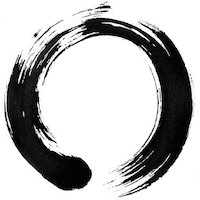
The circular principle can be seen from several different perspectives. This will show that the circular principle is not just a fighting method but also a universal principle of nature. it applies to ail aspects of life; mental, spiritual and physical.
First, see how the circular principle applies to respect For example, when you come into the Dojang you bow to your instructor as a sign of respect. This custom eventually comes back in a full circle. After many years of study and practice, you become an instructor and your students bow to you as a sign of respect. Also, when a student bows in respect to his instructor the instructor bows in return to the student. If an instructor shows bad manners then the students will learn bad manners. Conversely, when instructors behave properly with dignity the students will mirror this behavior. Those who give respect will have it returned to them.
The circular principle is evident in nature. For example night and day revolve in a never-ending cycle as the earth revolves on its axis. The four seasons of summer, autumn, spring and fall flow in a continuous circle as the earth rotates around the sun. This implies that in nature the circular principle is the basis of harmony between apparent opposites.
In Hapkido techniques the circular principle is used in many ways. In defense force is never met with force, but deflected and redirected. There are also many circular techniques: inside/outside crescent kick, spinning heel kick, roundhouse kick, hammer strike, and spinning side chap. Even the linear reverse punch requires a circular turn at the waist when properly executed Throwing techniques are always circular. Instead of force against your opponent’s force you use his momentum not your own strength. Even if you are thrown the proper break fall is a circular rolling motion.
The circular principle is to accept nature without stress, achieve harmony where there is opposition and never apply force against force. When you are attacked, you and the opponent are like two separate pieces. Using the circular principle you make the two pieces into one as you get in harmony with your opponent. For example, if you are confronted with anger and you return anger there wil1 be a clash.
However, if you are confronted with anger but you remain calm then the anger will dissipate and understanding can be achieved.
 The Sum Principle
This is the third principle of Hapkido. It is the combination of the water and the circular principle, or the "sum" of these two principles.
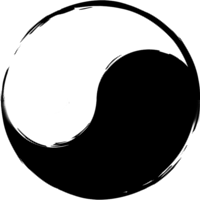
The sum principle is natural and has many examples in nature. For example, yin and yang are always shown together. They represent balance in the universe between opposite principles. Together they never end and when they are together there is harmony; like night and day.
They can be taken separately since each one is a complete and distinct principle unto itself. However, philosophically, it is the interaction of yin and yang that influences the destiny of creatures and things. Therefore it is the combination of yin and yang that is important.
The sum principle is seen in many other ways. Work and rest are separate and different. But, we must have both to achieve proper balance. Men and women are different. But men alone or women alone cannot make babies. We need both together to complete the cycle of life.
Thus, in Hapkido the sum principle achieves balance and harmony by combining the water principle and the circular principle. When attacked deflect and redirect the attack (circular principle), then now around and through your opponent’s defenses to counterattack (water principle). Also, the sum principle means concentration where the spirit and body work together.